Invited Speakers
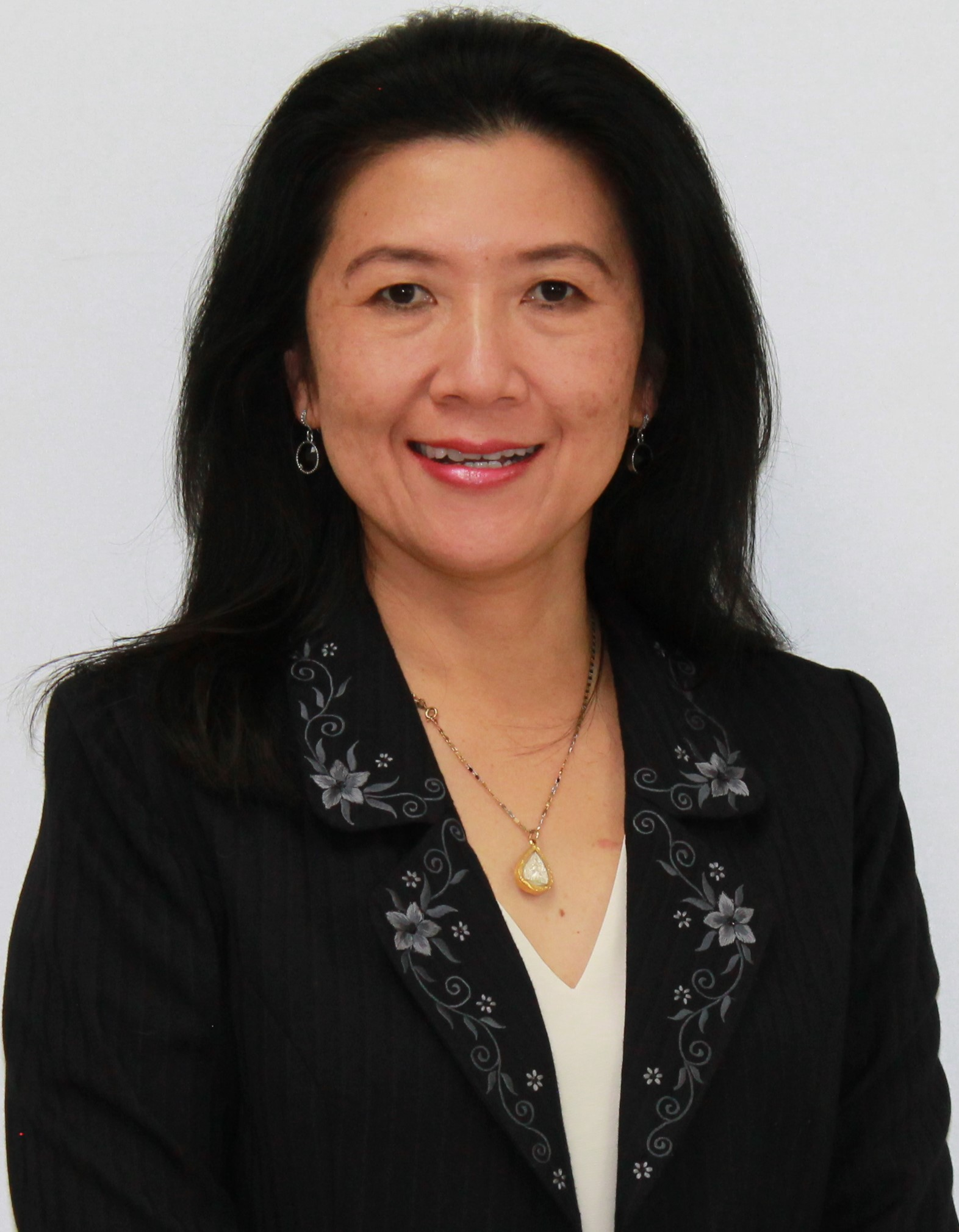
Prof. Suhansa Rodchua
University of Central Missouri (UCM), USA
Dr. Suhansa (Sue) Rodchua is a Professor and Program Coordinator in the School of Industrial Science & Technology at the University of Central Missouri (UCM), Warrensburg, MO, USA. She has published books and articles in the areas of Quality Costs in Manufacturing, Lean Six Sigma, XR/VR Online Curriculum Development, and Academic Integrity and Plagiarism Detection. She holds professional certifications of PMI-PMP, ASQ-CMQ/OE, and ATMAE-CTM, and earned her Ph.D. in Quality Systems from Indiana State University, USA. Since 2009, she has established and run the Global Book Donation project with the ASQ-UCM Student Chapter, donating brand-new textbooks to universities and colleges in developing countries.
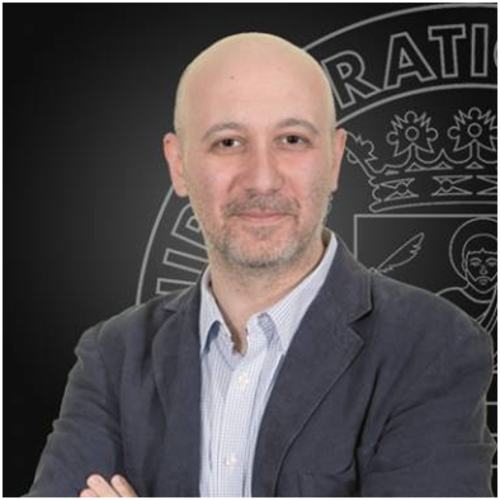
Prof. Francesco Colace
University of Salerno, Italy
Prof. Francesco Colace is a Professor at the University of Salerno, Italy. He has served as Scientific Coordinator and Scientific Responsible for several international Erasmus+ projects, including the Digital Humanist Project and the Lince Project, building partnerships with universities, companies, and trade associations across Europe. His research interests focus on digital humanities, cultural and digital tourism, and technology-enhanced learning, with a strong commitment to interdisciplinary and multinational collaboration.

Prof. Siti Hajar Binti Halili
University of Malaya (UM), Malaysia
Ts. Dr. Siti Hajar Halili is a Professor in Innovative Digital Learning at the University of Malaya (UM) and Head of the Curriculum & Instructional Technology Department. A professional technologist (Ts) under MBOT, she was formerly with the Research Division of Malaysia's Prime Minister's Department. She holds a Ph.D. in Adult Education Technology, a Master's in Educational Technology (USM), and a Degree in Information System Management (UiTM). Her expertise focuses on Flipped Learning, Open and Distance Learning (ODL), Digital Badges Learning, AI Learning, Instructional Design & Technology, and Digital Curriculum Innovation. She has received multiple awards, including the Dean's Award, Best Presentation Award, Excellent Service Award, and Gold Award.

Prof. Eugene Aw Cheng Xi
UCSI University, Malaysia
Professor Dr. Eugene Cheng-Xi Aw is a Professor of Marketing and Associate Dean for Research and Postgraduate Studies at the UCSI Graduate Business School, UCSI University, Malaysia, and serves as Director of the UCSI Poll Research Centre. He has published extensively in high-impact journals such as the Journal of Advertising, Journal of Business Research, Psychology & Marketing, and Technological Forecasting and Social Change. He has been named among the World's Top 2% Scientists by Stanford University from 2023 to 2025 and received the Early Career Research Excellence Award at the 2025 Malaysia Scopus Research Star Award Ceremony. He serves as Senior Associate Editor for Marketing Intelligence & Planning and as Associate Editor for several ABDC-A ranked journals.

Prof. Dimiter Velev
University of National and World Economy (UNWE), Sofia, Bulgaria
Prof. Dr. Dimiter Velev is with the Department of Informatics at the University of National and World Economy (UNWE), Sofia, Bulgaria, and serves as the Director of the Science Research Center for Disaster Risk Reduction at UNWE. He holds an M.Sc. degree in Electro-Engineering from the Sofia Technical University and a Ph.D. degree in Computer Systems, Complexes, Systems and Networks from the Pukhov Institute for Modelling in Energy Engineering at the National Academy of Sciences of Ukraine. He is the Chair of IFIP Technical Committee #5 (Information Technology Applications) and the IFIP Domain Committee on Quantum Computing. His main research interests include Information Technology, Integrated Information Systems for Disaster Management, Artificial Intelligence, Cybersecurity, Virtual Reality, and Quantum Computing.

Assoc. Prof. Ceren Cubukcu Cerasi
Gebze Technical University, Kocaeli, Turkey
Ceren Cubukcu Cerasi received her Bachelor's in Information Systems Engineering from the dual-diploma program of Binghamton University, USA, and Istanbul Technical University, Turkey, and completed her MBA from Bentley University, USA. She earned her Ph.D. in Informatics at Istanbul University, Turkey, winning an award for best study in the field of innovation with her Ph.D. thesis in 2019. After her MBA, she worked as a Business Systems Analyst in the Greater Boston Area. Her research interests include digital entrepreneurship, fuzzy systems, software development, and system analysis.

Assoc. Prof. Yi Ying
BINUS University, Indonesia
Assoc. Prof. Yi Ying is an Associate Professor in Curriculum Development at BINUS University, Indonesia, where she also serves as Research Coordinator and Manager of the BINUS Institutional Development Center. She holds a Doctorate in Curriculum Development from Universitas Pendidikan Indonesia, Master's degrees from Universitas Kristen Indonesia and Xiamen University, China, and a Bachelor's in Chinese Literature from Dharma Persada University. She has authored more than 60 articles and over 15 books, and holds more than 10 intellectual property rights. She received the Outstanding Leader recognition at the 2018 Visiting Program for Young Sinologist in Guangzhou, China.

Asst. Prof. Syuan-Lan Shih
Chaoyang University of Technology, Taiwan
Syuan-Lan Shih is an Assistant Professor in the Department of Industrial Design at Chaoyang University of Technology, Taiwan. She holds a Ph.D. in Design from Chaoyang University of Technology and a Master’s degree in Industrial Design from Konstfack University of Arts, Crafts and Design in Sweden.
Before entering academia, she worked as an industrial designer at BenQ and Dell, gaining extensive professional experience in product design and development. Her current teaching and research interests focus on industrial design education, virtual reality (VR), generative AI, digital design tools, and emerging technologies for creative learning.
In recent years, her research has explored the integration of immersive VR sketching and AI-assisted design tools into industrial design education, with particular attention to students’ learning experiences, design processes, and learning outcomes. She is interested in how emerging technologies can support creativity, spatial thinking, and new approaches to design learning.
In addition to teaching and research, Shih has extensive experience in professional design practice, design evaluation, and industry collaboration. Her professional design work has received international recognition, including the iF Design Award, while student projects under her supervision have received distinctions such as the Red Dot Design Award.